Top 5 Essential Settings to Optimize Your CS2 Pre-Round Setup
When preparing for a successful round in CS2, optimizing your pre-round setup is crucial. Here are the Top 5 Essential Settings you should consider to enhance your gameplay:
- Mouse Sensitivity: Adjust your mouse sensitivity to find the balance between precision and speed. Lower sensitivity typically results in better aim control, while higher sensitivity allows for quicker crosshair adjustments.
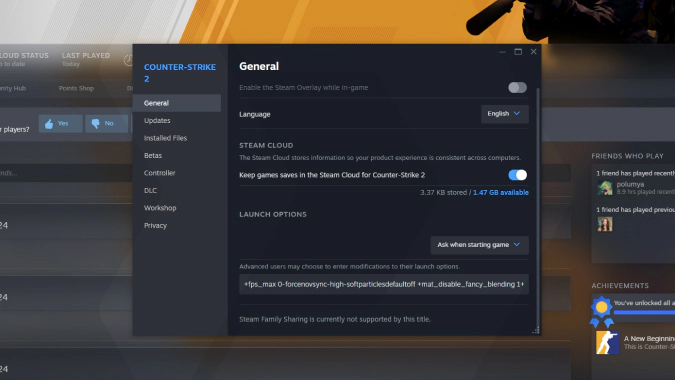
- Video Settings: Make sure your video settings are tailored to your hardware capabilities. Prioritize frame rate over visual fidelity by lowering settings like shadows and texture quality.
- Crosshair Customization: A well-defined crosshair can significantly improve your accuracy. Experiment with various styles, sizes, and colors until you find one that suits your play style and enhances visibility.
- Sound Settings: Sound plays a critical role in CS2. Ensure you have your audio settings correctly configured to hear footsteps and other in-game sounds clearly. Increasing the volume of game sounds over music can give you a strategic advantage.
- Key Bindings: Review and customize your key bindings for actions you perform frequently. Having comfortable and easily accessible controls will improve your reaction time during critical moments.
Counter-Strike is a highly popular tactical first-person shooter game franchise, known for its competitive gameplay and strategic depth. Players can engage in intense matches with different modes, including bomb defusal and hostage rescue. The introduction of cs2 bots has added a new layer of gameplay, allowing players to practice and refine their skills in various scenarios.
How to Choose the Best Crosshair for Your Playstyle in CS2
Choosing the best crosshair for your playstyle in CS2 can significantly enhance your aiming precision and overall gaming performance. The first step is to understand your personal preferences and playstyle. Are you an aggressive player who thrives on close-quarters combat, or do you prefer a more strategic approach with long-range engagements? Each playstyle may require different crosshair settings. For example, a player who favors sniping may opt for a smaller, static crosshair that allows for high precision, while an entry fragger might benefit from a more dynamic, larger crosshair that can be easily spotted in hectic situations.
Once you've identified your playstyle, it's crucial to experiment with various crosshair settings within CS2. Here are a few parameters to consider: thickness, length, color, and opacity.
- Thickness: A thinner crosshair may offer more precision, while a thicker one can stand out against the game environment.
- Length: Adjusting the length can help you see your target more clearly, especially at different ranges.
- Color: Choose a color that contrasts well with the game’s backgrounds to ensure high visibility.
- Opacity: A crosshair that is too faint may hinder visibility, while one that is too opaque can become distracting.
What Gear Do Pro Players Use for Their CS2 Setup?
When it comes to CS2 setup, professional players are often seen sporting high-quality gear that enhances their performance. The core components of their setups typically include a top-notch gaming mouse, such as the Logitech G Pro or the Zowie EC series, which offer precision and responsiveness vital for competitive play. Additionally, mechanical keyboards like the SteelSeries Apex Pro provide tactile feedback needed for quick reactions. Players also prioritize a high-refresh-rate monitor, often in the range of 240Hz or more, enabling smoother visuals that can make all the difference in fast-paced matches.
In addition to mice and keyboards, pro players invest in comfortable, ergonomic headsets like the HyperX Cloud II or the SteelSeries Arctis Pro, which offer excellent audio quality and comfort for long gaming sessions. Another essential element is the gaming mousepad, with many opting for large, high-speed pads that allow for unhindered mouse movement. Lastly, the importance of a reliable internet connection cannot be overstated. Many pros use wired connections for reduced latency and consistent performance, ensuring they maintain an edge in high-stakes competitions.