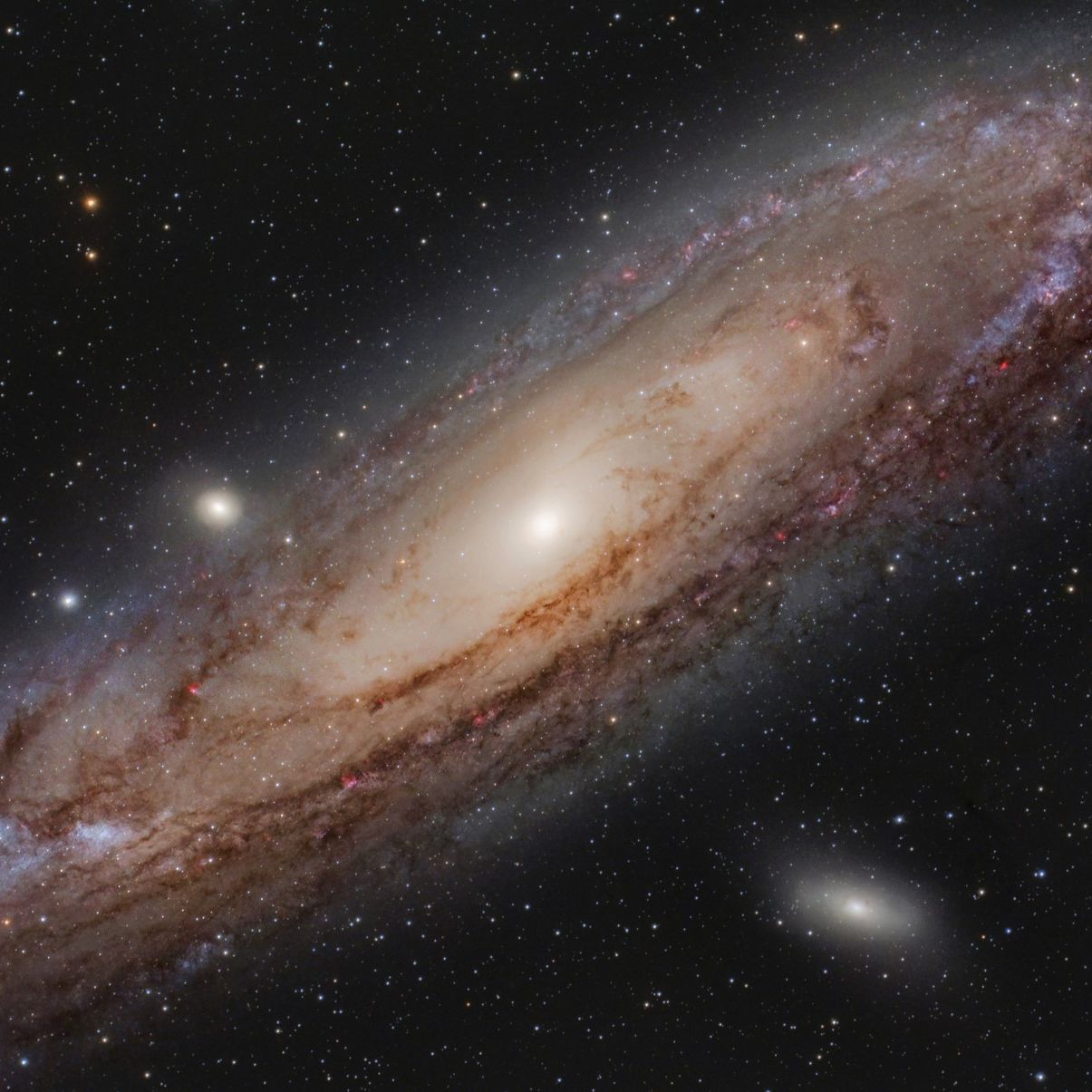
Exploring the Mysteries of Cosmic Phenomena: A Guide to the Universe's Most Breathtaking Wonders
The universe is a vast and mysterious expanse, filled with phenomena that challenge our understanding and inspire our curiosity. From the mesmerizing beauty of nebulae to the awe-inspiring power of black holes, the cosmos is a treasure trove of breathtaking wonders. As we explore these cosmic marvels, we gain insight into the fundamental questions of existence, such as our place in the universe and the origins of life itself.
Among the most captivating cosmic phenomena are:
- Supernovae - Staggering explosions marking the end of massive stars, releasing unparalleled energy.
- Galaxies - Massive systems of stars, gas, and dust, each with its unique shape and structure.
- Dark Matter - An invisible substance that constitutes most of the universe's mass and shapes cosmic structures.
Understanding these wonders not only captivates the imagination but also drives scientific discovery and technological advancement.
Counter-Strike is a popular first-person shooter game that emphasizes teamwork and strategy. Players can choose between different game modes, engaging in intense matches where they can purchase weapons and equipment. If you're looking to enhance your gaming experience, check out our Top 10 Samsung Galaxy Accessories to find the perfect gear.
How Do Stars Form and Evolve? Unraveling the Life Cycle of Celestial Bodies
The formation of stars begins in vast molecular clouds, also known as stellar nurseries, where regions of gas and dust coalesce under the influence of gravity. As these regions contract, they increase in density and temperature, eventually leading to the ignition of nuclear fusion in the core. This process marks the birth of a star, transforming a cold mass of gas into a vibrant, glowing celestial body. Over time, stars go through different stages of development, depending on their mass, which influences their life cycle significantly.
Once a star has reached the main sequence phase, it spends the majority of its life here, fusing hydrogen into helium. Depending on their initial mass, stars will eventually exit this phase and evolve into red giants, followed by more dramatic endings such as supernovae for massive stars or cooling into white dwarfs for smaller ones. This sequence of evolution not only illustrates the dynamic nature of stars but also their integral role in recycling cosmic materials back into the universe, forging new stars and planets in the process. Understanding how stars form and evolve sheds light on the fundamental processes that govern our universe.
What Lies Beyond Our Solar System? A Journey Through the Exoplanetary Frontier
As we gaze up at the night sky, a world of wonders lies beyond our own solar system, beckoning us to explore the vast tapestry of the universe. This journey takes us into the realm of exoplanets, planets that orbit stars outside our solar system. Scientists have identified thousands of these celestial bodies using advanced techniques such as the transit method and radial velocity, revealing a diverse array of worlds that challenge our understanding of planetary formation and the potential for life beyond Earth. Among these discoveries, some exoplanets lie within the habitable zone of their stars, sparking excitement about the possibility of extraterrestrial life.
The study of exoplanets is not just about discovering new worlds; it also deepens our understanding of our own solar system. By comparing the characteristics of exoplanets to those of our planets, researchers hope to unravel the mysteries of planetary systems' development. For instance, some gas giants are found in surprising proximities to their stars, upending traditional models of solar system formation. As technology advances and telescopes become more powerful, the exoplanetary frontier continues to expand, inviting both scientists and enthusiasts alike to ponder: What lies beyond our solar system?