Exploring the Advantages of Wireless Charging: Why You Should Make the Switch
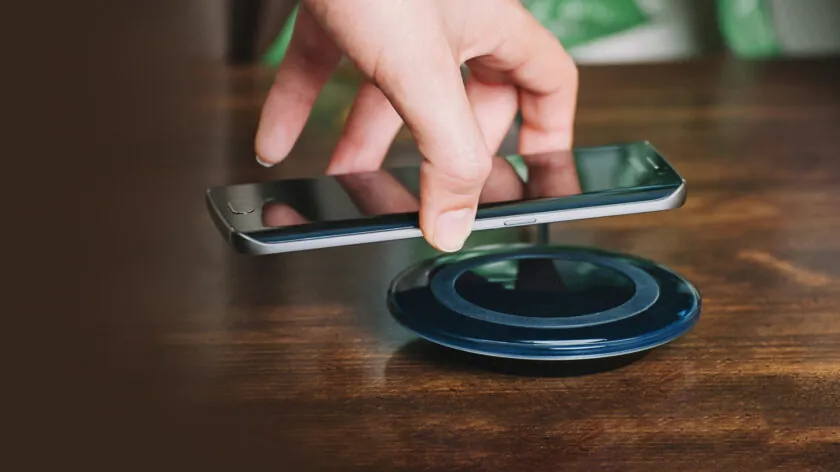
In today's fast-paced world, the convenience of wireless charging has become a game-changer for device users. Unlike traditional charging methods that require cumbersome cables, wireless charging offers a sleek and efficient alternative. Simply place your smartphone or smartwatch on a compatible charging pad, and watch as it powers up without the hassle of plugging and unplugging cables. This technology not only reduces wear and tear on charging ports but also creates a more organized workspace, free from the clutter of tangled wires.
Additionally, the advantages of wireless charging extend beyond mere convenience. Many modern devices are designed to support this innovative charging method, resulting in faster and more effective charging experiences. With features like fast wireless charging, users can now enjoy quicker power-ups without compromising on functionality. Furthermore, as the technology continues to evolve, we can expect even more compatibility across various devices, making the switch to wireless charging a wise choice for anyone looking to embrace a more efficient and modern lifestyle.
Counter Strike
Counter Strike is a popular first-person shooter game that pits teams of terrorists against counter-terrorists in various objective-based scenarios. Players need to use strategy and teamwork to outmaneuver their opponents and accomplish missions. Among the many accessories gamers enjoy while playing, the Top 10 Thin Silicone Cases for AirPods can help enhance the overall gaming experience with style and protection for their devices.
How Wireless Charging Technology Works: A Deep Dive
Wireless charging technology, often referred to as inductive charging, operates on the principle of electromagnetic fields to transfer energy between two objects. At its core, this technology utilizes induction coils—one placed in the charging pad and the other in the device being charged. When the charging pad is powered, it creates an electromagnetic field, which induces a voltage in the secondary coil of the device, allowing it to charge without the need for physical connectors. This process not only enhances convenience but also minimizes wear and tear on charging ports.
There are several key components that enable the efficient operation of wireless charging systems. The two main types are resonant inductive coupling and magnetic resonance. Resonant inductive coupling is common in smartphones, where the coils are tuned to the same frequency, facilitating power transfer over short distances. On the other hand, magnetic resonance allows for greater distance and can charge multiple devices simultaneously. As the technology continues to evolve, we can expect even faster charging speeds and wider compatibility across various devices, paving the way for a more seamless charging experience.
Is Wireless Charging Safe for My Devices? Debunking Common Myths
When it comes to wireless charging, many consumers have concerns about its safety and the impact it may have on their devices. One common myth is that wireless charging generates excessive heat, potentially damaging the battery. However, most modern wireless chargers are equipped with advanced heat management technology that minimizes overheating. According to a study by the Wireless Power Consortium, the heat produced by these chargers is typically kept within safe limits, ensuring your device remains unharmed during the charging process.
Another prevalent misconception is that wireless charging can lead to negative electromagnetic interference. In reality, wireless charging pads use magnetic fields to transfer energy, and these fields are well within safety regulations set by authorities like the Federal Communications Commission (FCC). Additionally, the charging efficiency of modern wireless technology has improved significantly, often rivaling traditional wired charging speeds. So, the idea that wireless charging is inherently unsafe or inefficient just doesn’t hold up against current evidence and innovation.